

Professor of Art & Department Chair
Saginaw Valley State University
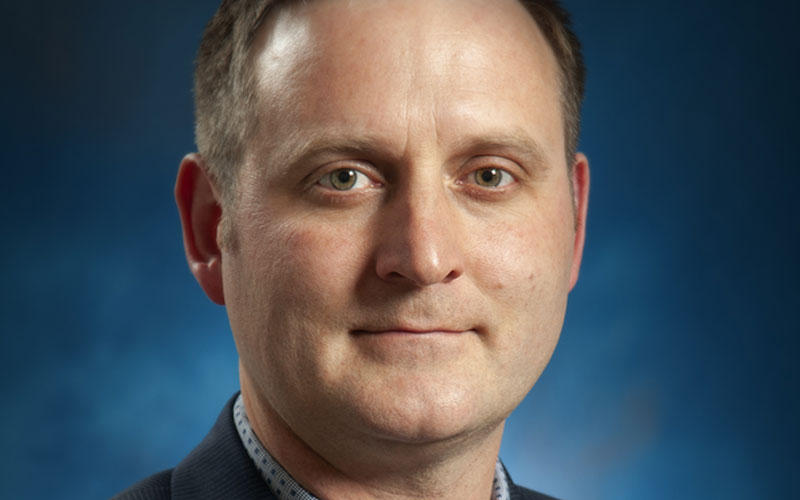
Blake has been teaching Graphic Design at Saginaw Valley State University since 2007, bringing more than 30 years of industry experience into the classroom. Before SVSU he taught at the University of Idaho, and before that he worked as a designer for brands including Nike, Disney, Sony, NBC, Xbox, Microsoft, Adidas, Oracle, and Pillar Data Systems.
He entered web design in 1998 and his work naturally expanded into User Interface and App Interface Design — disciplines he now teaches alongside Typography, Web Design, and Automotive Interface Design. In 2014 he founded Cardinal Solutions, SVSU’s student-run design consultancy, which has served more than 100 real clients and generated over $120,000 in student scholarships.
Blake began integrating AI tools into his Web Design curriculum in Winter 2022, among the first faculty at SVSU to do so. He currently co-teaches ART 490: AI Fluency, actively experiments with Claude Code in his own practice, and holds the Anthropic Academy AI Fluency for Educators certificate.
Lecturer of Art & International Programs Faculty Fellow
Saginaw Valley State University
Phillip is a painter, digital artist, and educator with over a decade of experience at Saginaw Valley State University. His work bridges traditional art practices with emerging technology, with a particular focus on the integration of AI into creative and educational processes. His teaching uses AI for in-class exploration to accelerate student learning, foster curiosity, and open new creative territory.
In October 2022, his presentation “If a Word Paints a Thousand Pictures” at SVSU’s Forum Lecture Series was the first public lecture on artificial intelligence at the university — and it started a conversation that has continued across the institution ever since. As a keynote speaker and international presenter, Phillip addresses both the opportunities AI offers educators and the ethical and practical challenges it raises.
He co-teaches ART 490: AI Fluency with Blake Johnson and embedded AI librarian Kyle Bylin, modeling collaborative and iterative learning as a core feature of the course. As an International Programs Faculty Fellow, his AI presentations have reached audiences in Japan, China, and Argentina.
Speaking Record
2026
April 24
SVSU Student Showcase — Saginaw, Michigan
"Pilot Study: AI Fluency Student Work"
Presented with Phillip Hanson. ART 490: AI Fluency students shared their projects at the university-wide Student Showcase, reaching faculty, peers, and external audiences across all five colleges.
April 17
International Programs — SVSU
“AI Literacy in the Classroom and Beyond”
Presented with Phillip Hanson. Explored how AI tools can support international students’ academic success. Two AI Fluency students attended and presented their work.
April 9
Center for Excellence in Teaching and Learning — SVSU
"AI Fluency in Practice"
Presented with Phillip Hanson, Kyle Bylin, and two AI Fluency students. Featured a live Vibe Coding demonstration and two ART 490 student projects, with students presenting their work directly to a faculty audience.
March 20
Gladwin CTE Center — Gladwin, Michigan
“Teaching in the Age of AI”
Presented with Phillip Hanson, Kyle Bylin, and two AI Fluency students. Cardinal Solutions student projects from ART 490: AI Fluency served as the primary case study.
March 17
Osher Lifelong Learning Institute — SVSU
“An Experimental Afternoon with AI”
Presented by Phillip Hanson. Public talk exploring AI tools and their relevance for lifelong learners.
February 6
Center for Excellence in Teaching and Learning Workshop — Z111, SVSU
“AI Fluency: What Our Students Should Know About AI and How to Teach It”
Moving beyond basic AI tool use to develop students’ critical understanding of how, when, and why to use AI for learning. Presented with Phillip Hanson and Kyle Bylin, Research & Assessment Librarian.
2025
October 11
Essexville-Hampton School District — Professional Development
intellAIgent: AI in Education
Full district professional development session for all middle and high school teachers. Presented with Phillip Hanson. Session structured in three parts: (A) Work — using AI to make educators’ jobs easier; (B) Students — using AI to improve student learning and critical thinking; (C) Beyond the Bird’s-Eye View — reflections on the broader implications of AI in education, including risks and responsible use.
October 8–10
ITLC Lilly Conference on College and University Teaching and Learning — Park Place Hotel & Conference Center, Traverse City, Michigan
“From AI Literacy to Fluency: Transforming Faculty and Student Trainings”
Presented with Kyle Bylin, Phillip Hanson, and Erik Trump. Conference focuses on evidence-based teaching and learning, bringing together faculty and administrators from across the United States.
June 12–13
AIGA Design Educators Community (DEC) — WEAVE Conference, Illinois State University, Normal, Illinois
“Weaving Interdisciplinary Collaboration into Community Engagement: A Case Study of SVSU Cardinal Solutions”
Peer-reviewed and accepted long paper. Solo presentation examining Cardinal Solutions as a decade-long model for interdisciplinary, community-driven design education, featuring a case study of the $8.2 million Hunger Solution Center expansion project.
April 5
Ghana Youth Leadership Conference — Virtual Presentation
“Unlocking Ghana’s Future with AI: Tools, Ethics, and Shared Imagination”
Presented with Phillip Hanson to Ghanaian youth student leaders participating in a post-conference project initiated by SVSU’s Vitito Fellows program and coordinated by Dr. Joseph Ofori-Dankwa. The session addressed how AI can accelerate national development across Ghana’s key sectors — finance, health, education, agriculture, and small business.
2024
December 17
Michigan Virtual AI Summit — The Lansing Center, Michigan
“The Michigan Education Association Engaging With Artificial Intelligence: Policy, Practice, and the Power of the School Librarian”
Contributed as interviewed subjects in video segments incorporated into the presentation by Chad Williams, MEA UniServ Consultant
October 24
Fifteenth International Conference on The Image — Interamerican Open University, Buenos Aires, Argentina
“Developing a Unified Visual Vocabulary for Contemporary Image-Making: Integrating Traditional Art and Design Vocabularies with AI Image Generators”
Presented with Phillip Hanson
October 22
UADE (Universidad Argentina de la Empresa) — Buenos Aires, Argentina
“The New Creative Landscape: AI’s Impact on Art and Design Professions”
Presented with Phillip Hanson
October 11
Center for Excellence in Teaching and Learning Workshop — SVSU
“Non-Coders Can Code with ChatGPT or Claude”
September 19
CETL Symposium Showcase — SVSU
“Cardinal Solutions: Community Engagement and Experiential Learning”
Solo presentation.
March 15
Eaton County Educational Employees–Retired — MEA Headquarters, East Lansing, Michigan
“Exploring AI: Innovations and Applications for MEA Faculty”
Presented with Phillip Hanson
March 12
Osher Lifelong Learning Institute (OLLI) — SVSU
“Accelerated Futures: Unpacking Artificial Intelligence”
Presented with Dr. Erik Trump
February 16
CETL Teaching & Learning Symposium — FLC Table Talks, SVSU
“Can AI Support Students’ Creativity and Innovation? What Can AI Do?”
Demonstrations and presentation with Brittany Collins and Phillip Hanson
2023
November 2
SVSU Faculty Association General Meeting
“AI Overview”
Educating SVSU faculty about the evolving AI landscape in higher education and strategies to adapt. Presented with Phillip Hanson.
October 27
MAHE Higher Education Professional Development Conference — Lansing, Michigan
“Embracing AI in Education: Opportunities, Risks, and Responsible Implementation”
Keynote address presented with Phillip Hanson
September 22
Center for Excellence in Teaching and Learning — SVSU
“How Are We Using AI Tools in Our Courses and Work?”
Group presentation
August 18
SVSU Center for Excellence in Teaching and Learning
“Embracing AI in Education: Opportunities, Risks, and Responsible Implementation”
Presented with Phillip Hanson
August 2
SVSU Center for Excellence in Teaching and Learning
“AI: What You Need to Know for the Fall”
Group presentation with Phillip Hanson
July 19
Educational Podcast
“Understanding AI-Generated Content: A Faculty Discussion”
With Prof. George Courser
June 26
Michigan Education Association 2023 Summer Leadership Conference
“Embracing AI in Education: Opportunities, Risks, and Responsible Implementation”
Presented with Phillip Hanson
January 27
Center for Excellence in Teaching and Learning — SVSU
“AI & U: Implications for Teaching and Learning”
Group presentation
2022
October 27
The Forum Lecture Series — Saginaw Valley State University
“If a Word Paints a Thousand Pictures”
Phillip Hanson. The first public lecture on the topic of artificial intelligence at SVSU.
Center for Excellence in Teaching and Learning — SVSU
“How Are We Using AI Tools in Our Courses and Work?”
Group presentation
Tell us about your event and what you want your audience to walk away with.
Get in Touch →